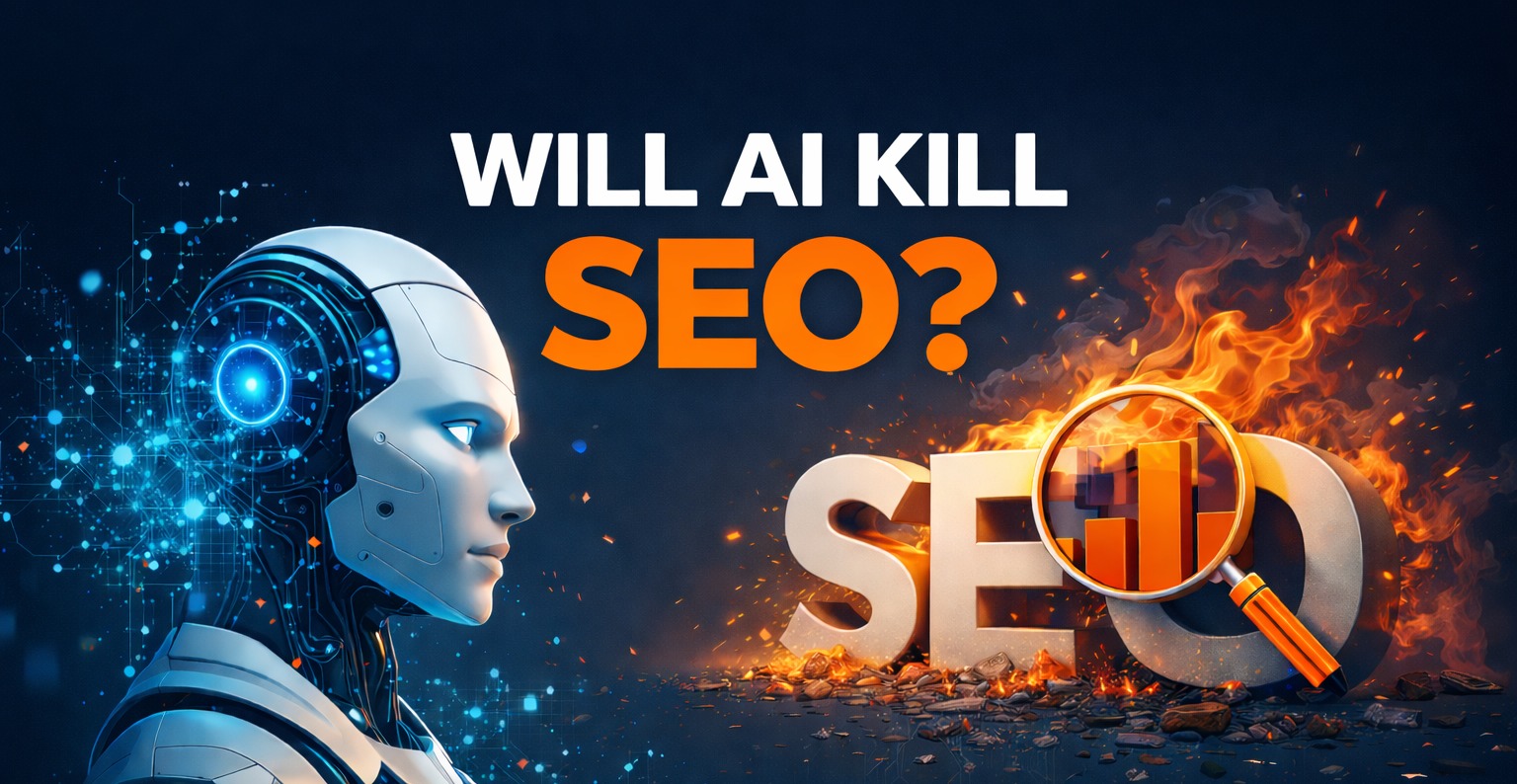
The rise of AI chatbots and Google’s Search Generative Experience (SGE) has led to worrying rumors. Some headlines claim that AI could replace Google and threaten SEO jobs. In this article, we’ll clear up five myths about AI to prove that SEO is evolving, not dying.
Myth 1: Organic Traffic Is Plummeting (Look at HubSpot)
The Myth: Recent drops in website traffic prove AI is killing SEO. If HubSpot’s blog can lose 75-80% of its traffic overnight, no website is safe, right?
The Reality: Some sites have lost traffic, but it’s not only because of AI. HubSpot’s blog lost around 75% of its organic visits from March 2023 to January 2025. AI Overviews are pulling clicks away from how-to articles. But other factors play a role as well: In late 2024, Google updated its algorithms. HubSpot also changed its content strategy then.
People see this issue on sites besides HubSpot. Other Q&A sites, like Chegg and Stack Overflow, saw declines. But some forums, such as Quora, gained visibility in AI-driven results. It’s not as simple as “organic traffic is all down.” Sites that answer basic questions struggle more, but specialized and deep-dive content thrives.
Myth 2: AI Search Results Don’t Link to Websites
The Myth: Google’s AI answers take content without giving credit. Even if you end up in an AI Overview, it’s not going to link to you.
The Reality: Most AI Overviews (around 86%) do include source links. These links usually appear as “Learn more” and reference top organic results. Shorter AI responses might not include links for basic facts. But complex questions will still provide citations, and those citations get more clicks than the same URL in a blue link.
That said, citations don’t guarantee traffic. Many users get what they need from the AI snippet and move on. But links can still bring in clicks if users seek more information or trust the source. If you create relevant, high-quality content that helps people, you’re a lot more likely to win a click.

Myth 3: “AI Overviews Don’t Hurt CTR”
The Myth: AI summaries only filter out junk clicks, not clicks on good content.
The Reality: AI Overviews DO hurt CTR. Especially for non-branded keywords and low-ranking results. In April 2025, Ahrefs discovered that the position 1 CTR dropped by 35% when an AI Overview showed up. Amsive found similar results in a study of 700,000 keywords. The average CTR dropped by 16%. It fell even more, up to 37%, when both an AI box and a Featured Snippet showed up.
If your pages target simple-answer top-of-funnel keywords, AIO is taking your clicks. But if you’re going after branded and high-intent bottom-of-funnel keywords, you’re in luck. Amsive found branded queries gained an 18.7% CTR boost when mentioned in AI blurbs.
When an AIO and a featured snippet shows up, you lose 75% of clicks, even if you are #1.

Myth 4: “Google Penalizes AI Content”
The Myth: Using AI to create content is against Google’s spam rules.
The Reality: Google’s official stance is quality over method. They care about what the content provides to users, not about how the producers create it. Google has made it clear that AI or automation isn’t against their rules. The content only becomes a problem if creators make it for search engines instead of for people.
In March 2024, Google strengthened its spam policies to address “scaled content abuse.” This policy targets sites that create many low-value pages. These sites often use automation or AI to manipulate rankings. It’s not about the AI; it’s about the unhelpful content. Spam is spam, no matter whether a human or a machine created it.
If your AI content shows attention to detail or helps people, it’s fine. A website with 10,000 generic blog posts packed with keywords risks penalties. This isn’t due to AI; it’s because the site is spam.
Myth 5: “Traditional SEO Factors Don’t Matter Now”
The Myth: Quality content, backlinks, and technical optimization don’t matter now. Google’s AI can answer questions. So, Google will update the algorithm to benefit them, not you.
The Reality: Google’s ranking systems still follow the same playbook. Backlinks remain a major signal of authority and trust. The leaked 2024 Google search ranking documents mention link-based metrics. Backlinks still pass authority and can boost your rankings, as they have in the past.
Google now assesses authority in a more holistic way. The leak also suggested a new idea: “Site Authority.” This likely includes backlinks, content quality, and expertise related to specific topics. You can’t fake authority with spammy links. Quality backlinks from reputable sources remain very strong signals in that mix. They’re an endorsement that your content is valuable, which no algorithm is likely to ignore.
SEO in 2025 still focuses on classic EEAT principles. AI hasn’t rewritten those rules; it’s refining how they’re applied. In a recent Forbes survey, 51% of SEO specialists said AI will not change their current SEO strategies. AI is an extra layer to SEO, not a replacement for the basics.
Conclusion: AI is changing search, not killing SEO.
Traffic patterns are changing. Some old tactics, like producing many shallow blog posts, are not working anymore. But businesses that focus on in-depth content will continue to capture organic traffic. Those that optimize for AI summaries will do even better. SEO keeps evolving, as it always has.
Don’t buy into the hype or doom-saying. But recognize that SEO IS more competitive now. AI overviews can reduce clicks on simple queries. So target complex queries and build your brand. Focus on where AI has trouble. This includes personal experiences, opinions, and niche expertise. Keep investing in SEO basics, like site quality and backlinks.
There’s gonna be pain (as we saw with CTR drops) but the spoils will go to those who adapt. Good luck out there!